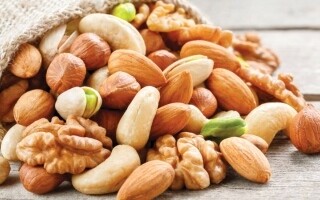
"Umm Ali" is a hot dessert, often served with an extra layer of nuts on top. "Umm Ali" is no longer just a traditional homemade dessert, but has become a main dish in restaurants and hotels during the month of Ramadan and on family occasions, where it is presented with modern touches, adding whipped cream, ice cream, or various flavors like chocolate and coconut. Its uniqueness lies not only in its rich taste and warm texture but also in its name, which is linked to a historical story dating back to the Mamluk era in Egypt. Beneath its layers covered in milk and pastry, "Umm Ali" holds a historical tale connected to the widely circulated story of Shajar al-Durr, who took over rule after her husband, Sultan as-Salih Najm ad-Din Ayyub, died in 1249, during a critical period that coincided with a military campaign led by King Louis IX of France against Egypt. Thus, "Umm Ali" has maintained its place in popular memory, bringing together an exciting historical story and culinary heritage that continues to renew through generations. Food recipes are not just dishes served at the table, but an integral part of the culture of communities and the heritage of peoples passed down through time. It is said that Umm Ali, celebrating the demise of her rival, ordered the preparation of a dessert made of flour, ghee, and sugar to be distributed among the people, and the dessert has been named "Umm Ali" ever since. Over time, the recipe evolved, becoming more diverse and easier to prepare. Many dishes are linked to stories and tales that became the reason for their emergence and spread, becoming part of the cultural and human memory in their countries and the world. The accounts state that she plotted his assassination, and later her first wife took revenge on her, which ended with the killing of Shajar al-Durr in a famous incident. However, her rule did not last long, as she was forced after about 80 days to marry Prince Izz ad-Din Aybak and formally cede the throne to him to absorb the anger of those rejecting a woman's rule, while she continued to manage state affairs from behind the scenes. The conflict within the palace escalated after Aybak distanced himself from his first wife and son Ali, before the events turned when he decided to remarry.