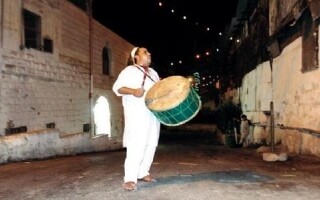
The profession of the 'musahharati' is one of the most prominent features of the month of Ramadan. He is the man who patrols the streets before dawn, beats his drum and chants religious hymns, calling on people to wake up to eat the suhoor meal in preparation for the fast. The traditional form of the musahharati, as we know it today, began during the Abbasid and Fatimid eras, when rulers began to appoint specific people to wake others before dawn. Their soldiers would pass by homes, knocking on doors before the Fajr prayer, to awaken the sleepers for suhoor. Since then, the profession has been widely accepted by the general public, as the wali was the first to practice it. During the Mamluk era, 'Ibn Nuqta' appeared, the sheikh of the musahharati guild, who was the sultan's personal waker. They refined their profession by practicing drumming with a stick; the drum was called a 'baza'. They would play strong, regular, and loud beats capable of awakening an entire street. The profession then evolved, and the musahharati began to chant folk poems and zajal, entertaining listeners and making people enjoy waking up to hear them and eat their suhoor. The musahharati's compensation changed over the centuries. In the Levant, he was known as the 'muwaqqiz', while in Morocco, he was called the 'tabbal'. The profession of the musahharati appeared in Egypt during the Fatimid era. According to researcher Ahmed Amer, it emerged during the time of Sultan al-Hakim bi-Amr Allah, who ordered people to sleep immediately after the Tarawih prayers. Over time, the profession spread to various Arab countries and adapted to local customs. In Egypt, the phrases used by the musahharati changed, with the most famous being: 'O sleeper, God is one, O sleeper, remember God, eat your suhoor, O servants of God! Wake up, O sleeper, the Everlasting God! Say: I intend to fast this month if I live, and to stand at dawn in this noble Ramadan.' Previously, he would receive a portion of the kharaj (land tax) and some crops and grains.