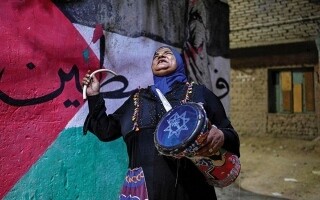
Holding a small drum, she sets the rhythm to her steps, her voice echoing between buildings, calling on residents to wake up and have their pre-dawn meal during the holy month of Ramadan. It wasn't easy at first, as she faced the surprise and bewilderment of some, but she soon gained acceptance and encouragement from the neighborhood's residents, who grew accustomed to her voice and now await her. She walks through streets she knows well, making sure to pass the houses in the same order each night. She insists that continuing this task is not just a seasonal job, but a message to preserve a Ramadan tradition that reflects the community's identity and spirit, and brings a special pulse to the streets during the holy month's nights. Every night, she revives a popular tradition linked to Egyptians' memories for decades. Dala, who chose to enter a field long dominated by men, says her passion for the spiritual atmosphere of the holy month is what drove her to take up the drum and go out into the street. For her, these simple moments are what give the experience its true meaning. Despite the spread of smartphones and modern alarms, Dala sees that the 'mesaharati' has a human touch that cannot be replaced, as it brings a communal spirit and a sense of fellowship among neighbors to the pre-dawn meal. Sometimes, a resident will appear on their balcony waving to her, or open their window to return the greeting, while others simply offer a quick smile before returning to preparing their meal. In the streets of Hadayek El Maadi district, south of the Egyptian capital Cairo, Dala begins her day just before the first light of dawn.