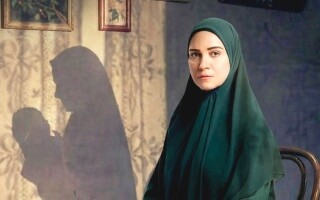
In the last dramatic Ramadan season, which saw fierce competition and a variety of works, actress Riham Abdel Ghaffour decided to take the most difficult path, leaving her usual safe artistic zones to dive into one of the most psychologically complex, harsh, and dark areas through her experience in the series 'The Story of Narcissus'. This time, the Egyptian star did not present a traditional tragic role of a woman deprived of motherhood, but offered a complex psychological performance that skillfully balanced between the fragility of the victim and the cruelty of the tormentor, establishing herself as one of the most significant acting ventures in the recent Ramadan race. This success is attributed to the innovative directorial vision and the 'fresh,' perplexing approach presented by director Samh Alla in his first experience with long-form television drama. He benefited from his dense cinematic language, for which he had been internationally honored in short films, and proposed meticulous visual approaches that supported a text fraught with apprehension, woven with a skillful dramatic escalation, crafted by writer Ammar Sabri, placing their leading lady together in a restrictive framework that reflected the details of her suffering. A Bold Approach. The work derives its crucial cohesion from its bold handling of the issue of 'infertility' from a cultural and moral perspective, viewing it as a 'stain' capable of destroying human nature. Riham Abdel Ghaffour astutely captures the threads of this suffering to present the character of 'Narcissus'—the loving wife driven by her fear of exclusion and rejection, and her harsh experience from her first divorce, into a morbid obsession with losing her current husband 'Awni', portrayed by Egyptian actor Hamza Al-Alili, sliding towards a dark swamp from which there is no escape. From forging medical tests and faking a pregnancy, to committing the crime of child abduction, and culminating in murder, Narcissus progressively descends into her sins to build a fictional family and a manufactured happiness, painting a confusing acting tableau that Ramadan series viewers unanimously described as 'the devil's look in an angel's face'. Despite the protagonist sinking into complex, tangled, and burdensome paths full of ambiguities, cruelty, and sins that reached the point of her watching her mother-in-law's death without intervening, Riham Abdel Ghaffour succeeded in this work in retaining a poignant human dimension that reached the level of public surprise. A wide segment of the audience expressed their astonishment at her ability to wrench tears and evoke deep empathy for a character who committed the most heinous crimes and gravest violations, confirming that she manipulated their emotions in many moments of the work with her sincere features, lost looks, and complete avoidance of affected emotions. A Societal Trial. At first glance, presenting the show's heroine as a child kidnapper might seem to tarnish the image of the Arab woman in general, but the reality proved otherwise. The critical consensus on this experience went in a completely opposite direction: the work did not condemn the female character 'Narcissus', but rather judged society and its harsh double standards that seek excuses for an infertile man while stripping a woman of her human value if she is not a mother. Opinions converged on the idea that 'Narcissus' is not evil by nature, but a peaceful person broken by psychological oppression and looks of pity, and that the show's creators successfully employed a 'shock' method to put their finger on the wound, pointing out that the protagonist's descent into crime is not an insult to women, but an alarm bell and a warning cry for society to lift restrictions on individual destinies and reject the trial of women for fates for which they are not to blame. A Special Duality. The dramatic experience of the series 'The Story of Narcissus' could not be complete without the dynamism of interaction with her 'tormented' surroundings. The unique duality that paired her with actor Hamza Al-Alili, though it reflected a great dramatic opposition, was loaded with emotional charges saturated with love, empathy, and unconscious following, which reached its climax in several scenes of the work, most notably the scene where his wife is blackmailed, triggering his anger, as Narcissus shifts from being an agent of events to a tool stripped of free will. • The series is a wake-up call for society to lift restrictions on individual destinies and to reject the trial of women for fates for which they are not to blame. • The show's protagonist progressively descends into her sins to build a fictional family and a manufactured happiness, painting a confusing acting tableau.